
Special Places – Cultural Tour
Spittal an der Drau delights visitors with its Renaissance architecture, charming town squares, and exciting cultural sites. Many highlights are centrally located and can be easily explored on foot at a relaxed pace.
Station 1: Parish Church of St. Mary’s Annunciation
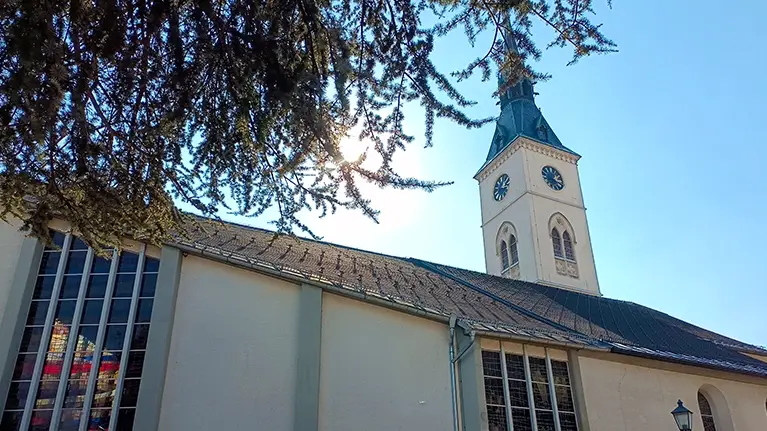
Considered the town’s place of origin. Despite numerous renovations and catastrophes such as earthquakes and fires, historical traces can still be found here, including the 14th-century “Ortenburg stone reliefs” and a remarkable Pietà.
Station 2: Petzlbräu (City Archives)
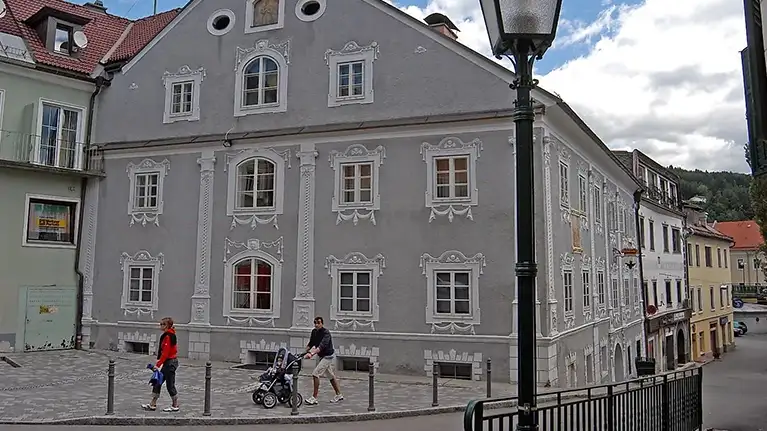
A building featuring a striking facade decoration from the late Baroque-Josephinian period (around 1780). It served for a long time as the Porcia family brewery and now houses the city archives.
Station 3: Das Spittl (now Carinthia University of Applied Sciences)
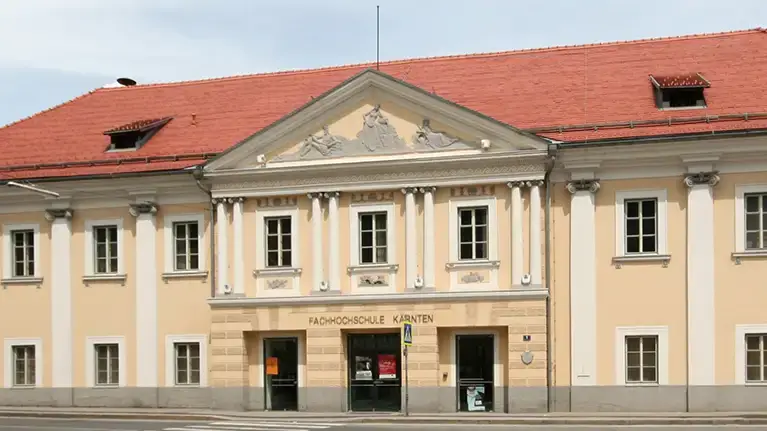
A former court hospital built by Gabriel von Salamanca in the style of a Renaissance palace with an arcaded courtyard. It served as a hospice for the needy and travelers and is now the headquarters of the Carinthia University of Applied Sciences (Fachhochschule Kärnten).
Station 4: Schüttpacher Townhouse
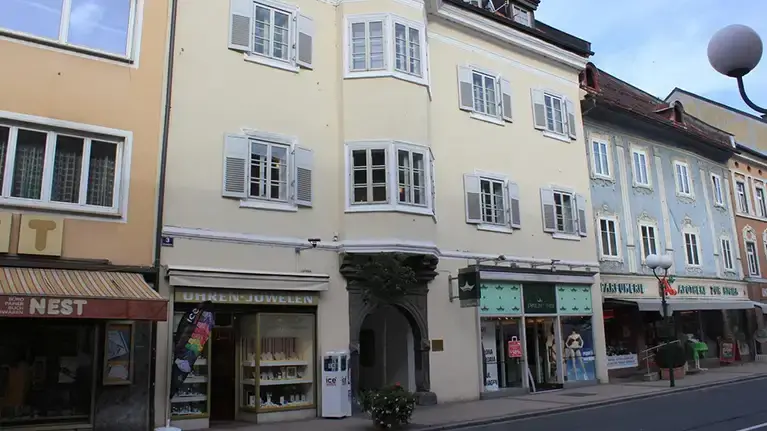
A characteristic 16th-century townhouse located on the main square. A Renaissance plaque indicates the granting of the coat of arms by Emperor Ferdinand I.
Station 5: Khevenhüller Town Palace (City Hall)
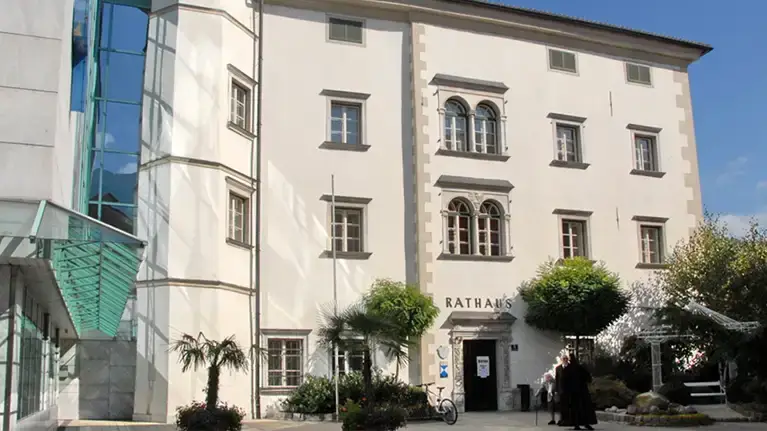
A three-story Renaissance building, constructed in 1537. It is the birthplace of Hans Khevenhüller, a significant diplomat, and today serves as the town’s city hall.
Station 6: The Malbaum
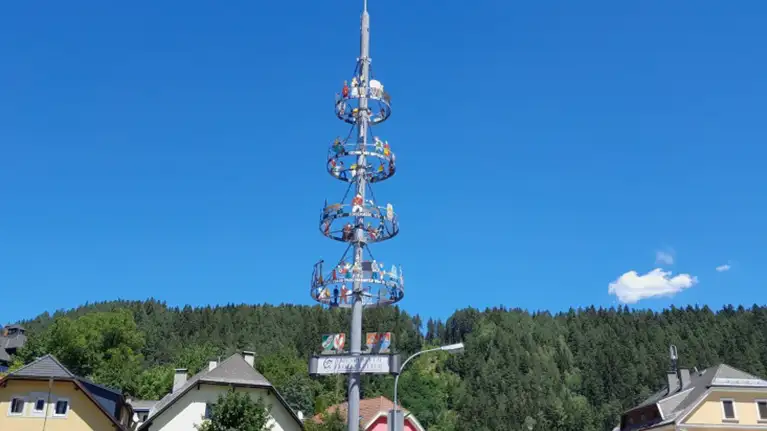
A pictorial representation of the town’s history from the Celtic era to the present. Nearby is the “Altdeutsche Weinstube” (Old German Wine Tavern), featuring interesting architectural design.
Station 7: Porcia Castle
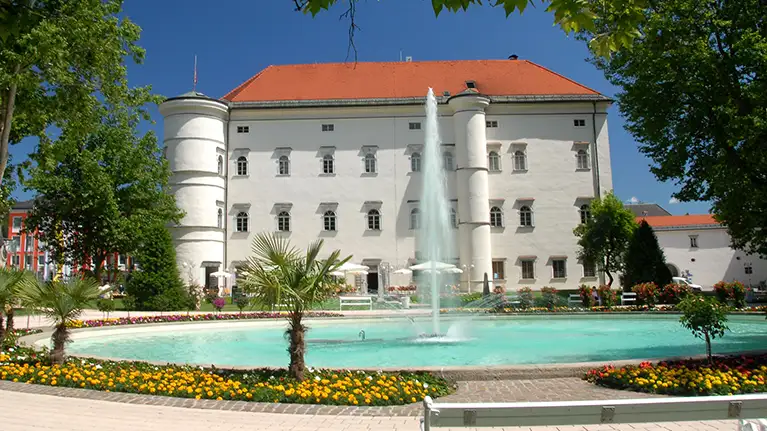
One of the most significant Renaissance buildings north of the Alps, featuring a three-story arcaded courtyard. It houses the Museum of Folk Culture and serves as the backdrop for the International Choir Competition and the Comedy Festival (Komödienspiele).
Station 8: Parkschlössl
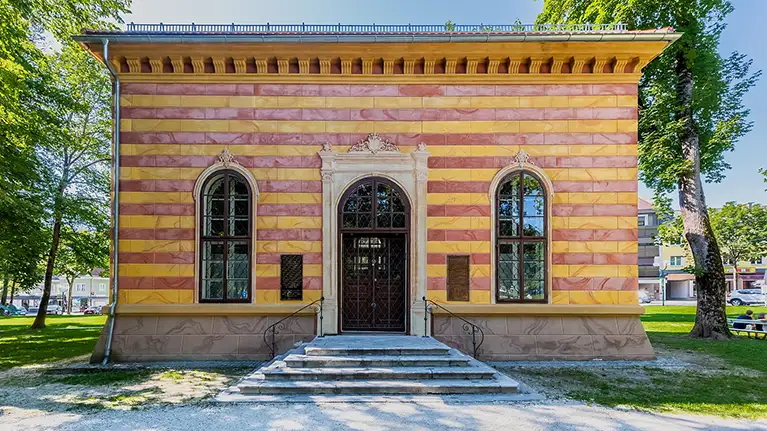
Built in the 16th century, it formerly served as a “Lusthaus” (pleasure house) for musical celebrations of the Princes of Porcia. Today, it is used as a cultural meeting point and gallery for young local artists.